5 Min Read
Planning a home addition is exciting, but can also feel overwhelming without a clear plan. From budget and design to permits and contractor selection, every decision impacts the final result. Many problems that appear during the construction of an addition are actually the result of poor planning.
In this blog post, you’ll learn how to plan a home addition step-by-step, what to consider before starting, how much it costs in Michigan, and how to confidently move from an idea to a well-executed project.
If you’re in Grand Blanc, Clarkston, Flushing, Fenton, or other Genesee County cities and nearby areas, this guide will help you approach your project with clarity and confidence.
 In this blog, you'll learn:
- How Should I Plan a Home Addition?
- What Should I Consider Before Adding Onto My House?
- Home Addition Planning Checklist
- How Much Does It Cost to Add a Room in Michigan?
- Permits and Local Considerations in Genesee County
- How Swank Builders Helps Homeowners Plan Additions
- Frequently Asked Questions About Planning a Home Addition
- Start with a Plan for Your Genesee County Addition, Not Just an Idea
How Should I Plan a Home Addition?
A structured approach to defining your goals, budget, and project scope before construction begins is essential.
Most homeowners start with a simple idea: “We need more space.” The challenge is turning that idea into a realistic, well-scoped project that fits your home, lifestyle, and budget.
Without a plan, projects tend to drift. Costs increase, timelines stretch, and decisions become reactive instead of intentional.
Start with the “why”
Before thinking about square footage or finishes, define the purpose of your addition:
- Are you creating space for a growing family?
- Adding a primary suite to age in place?
- Expanding a kitchen for entertaining?
- Building a home office or multi-use space?
- Adding a rental suite?
Clarity here drives every downstream decision, from layout to budget.
Align scope with budget early
One of the biggest mistakes homeowners make is designing first and pricing later. That often leads to disappointment when the numbers don’t work out.
Instead:
- Establish a realistic investment range early
- Work with a design-build contractor to shape the scope accordingly
- Make trade-offs intentionally (size vs. finishes vs. complexity)
Think beyond the addition itself
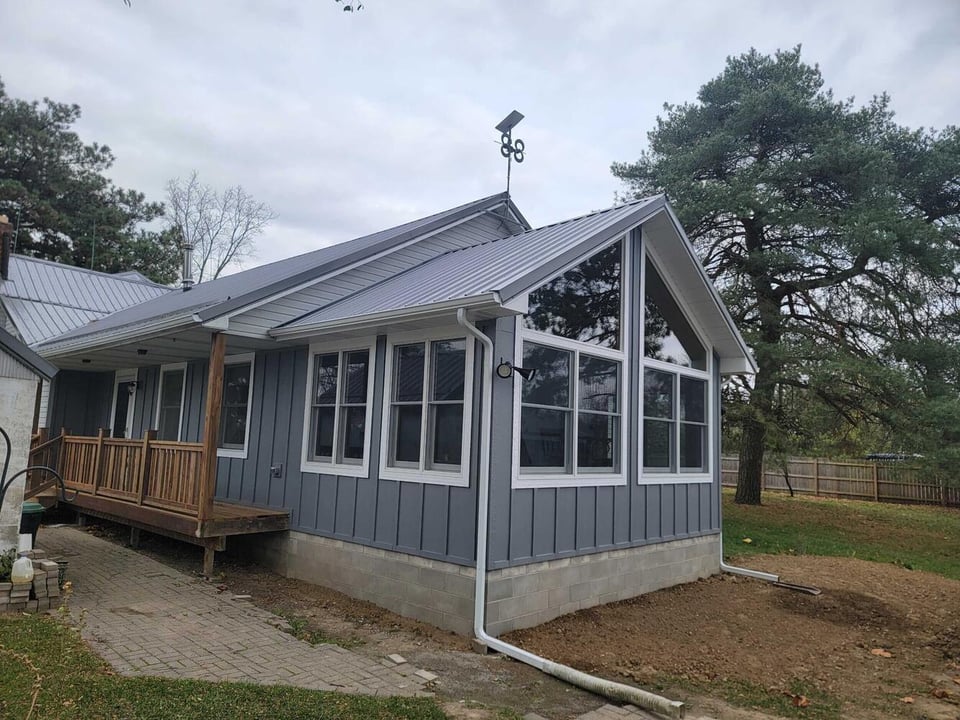
A successful addition integrates with your existing home, both structurally and visually.
That means considering:
- Rooflines
- Exterior materials
- Flow between old and new spaces
- Structural implications (foundation, load paths, utilities)
Planning at this level avoids costly redesigns later.
What Should I Consider Before Adding Onto My House?
There are certain foundational considerations that impact feasibility, cost, and long-term satisfaction with your addition.
These factors often determine whether projects succeed or run into serious problems, and mustn't be overlooked.
1. Your property limitations
Not every home can accommodate every type of addition.
Consider:
- Lot size and setbacks
- Easements or zoning restrictions
- Septic or utility limitations
- HOA requirements (if applicable)
These constraints shape what’s possible before design even begins.
2. Your home’s existing structure
Older homes, in particular, can introduce complexity:
- Foundation condition
- Framing differences
- Electrical and plumbing capacity
- Insulation and energy performance
Understanding these factors early helps avoid mid-project surprises.
3. Neighborhood and resale impact
While your home should fit your needs, it’s worth considering how the addition aligns with surrounding homes.
Ask:
- Will this overbuild for the neighborhood?
- Does the layout make sense for future buyers?
- Does it improve functionality, or just add space?
The goal is to add value, not just square footage.
4. Timeline and disruption
Additions are more invasive than interior remodels.
Depending on scope, expect:
- Temporary loss of access to certain areas
- Noise and dust
- Possible relocation of utilities or living spaces
Planning for this upfront makes the experience more manageable. Check out our blog on how long a home addition takes.
Home Addition Planning Checklist
Below is a practical checklist to determine if you’re ready to move forward with your project.
Before you contact a contractor, use this home addition planning checklist to assess your readiness.
Project clarity
☐ I can clearly describe what I want to add and why
☐ I’ve prioritized needs vs. wants
☐ I understand how this addition will improve my daily life
Budget readiness
☐ I have a realistic investment range in mind
☐ I understand that costs vary based on complexity and finishes
☐ I’m prepared for a design phase before final pricing
Property & feasibility
☐ I’ve considered lot constraints and zoning
☐ I understand my home may require structural updates
☐ I understand my home may need upgrades to electrical and plumbing systems
☐ I’m open to adjusting scope based on feasibility
Contractor & process
☐ I want guidance through design, budgeting, and construction
☐ I value communication and a clearly defined process
☐ I’m prepared to invest time in planning before building starts
If most of these boxes are checked, you’re in a strong position to start conversations with a qualified contractor.
How Much Does It Cost to Add a Room in Michigan?
Here's a realistic look at pricing ranges and what drives cost for home additions.
One of the most common questions homeowners ask is: “What does it cost to add a room in Michigan?”
The honest, unsurprising, but nevertheless unsatisfying answer: it depends. But there are reliable ranges to guide expectations. Check out our Cost Guide here.
Typical cost ranges
In Genesee County and surrounding areas, most additions fall within:
- Basic additions: $100,000 – $200,000
- Mid-range additions: $200,000 – $350,000
- High-end or complex additions: $350,000 – $500,000+
These ranges align with real-world project types like primary suites, kitchen expansions, and multi-room additions.
What drives cost
Several factors influence where your project lands inside the price range:
- Size and square footage
- Foundation type (slab, crawlspace, basement)
- Structural complexity
- Plumbing, HVAC, and electrical work
- Interior finishes and level of customization
- Site conditions (grading, access, etc.)
Why early budgeting matters
Homeowners often underestimate costs because they’re comparing to interior remodels or outdated estimates.
A structured planning process helps:
- Align expectations with reality
- Avoid overdesigning beyond budget
- Create a clear scope before construction begins
The goal isn’t to find the lowest number, it’s to define the right investment for your goals.
Permits and Local Considerations in Genesee County
Local regulations and approval processes affect your project timeline.
Permits aren’t the most exciting part of planning, but they’re essential.
In Genesee County (including Goodrich, Grand Blanc, and Fenton), most additions require:
- Building permits
- Zoning approval
- Inspections at key stages
Why this matters
Skipping or underestimating this step can lead to:
- Project delays
- Fines
- Required rework
- Issues when selling your home later
What to expect
A qualified contractor will typically:
- Handle permit applications
- Coordinate inspections
- Ensure compliance with local codes
However, timelines can vary depending on:
- Municipality
- Project complexity
- Seasonal demand
Planning for this early helps avoid unnecessary frustration.
How Swank Builders Helps Michigan Homeowners Plan Additions
A structured, guided approach removes uncertainty from the planning process.
Most homeowners who like the idea of an addition struggle with where to start. That’s where a design-build approach with an experienced builder makes a difference.
A guided planning process
Rather than jumping straight into construction, the right partner will:
- Help define your goals and priorities
- Establish a realistic budget range
- Develop a clear design and scope
- Provide detailed pricing before construction
Clear communication at every step
Homeowners consistently value:
- Timely responses
- Defined timelines
- Transparent expectations
These are essential to a successful project.
Focus on long-term value
A well-planned addition should:
- Feel cohesive with your home
- Improve daily living
- Hold value over time
That only happens with thoughtful planning and a solid process.
Frequently Asked Questions About Planning a Home Addition
How long does it take to plan a home addition?
Most planning phases take several weeks to a few months, depending on complexity. This includes design, budgeting, and permitting.
Do I need permits for a home addition in Genesee County?
Yes, most additions require permits and inspections. A qualified contractor typically manages this process for you.
What are the most common home addition mistakes?
The most common mistakes are underestimating cost, skipping the planning phase, and hiring based on price instead of process. These often lead to budget overruns, poor design integration, and frustrating construction experiences.
How big can a bump-out be?
A bump-out is typically a small extension—often 2 to 10 feet—designed to expand an existing room without a full addition. The exact size depends on your home’s structure, lot constraints, and local zoning regulations.
What additions add the most value to a home?
Additions that improve functionality—like primary suites, kitchen expansions, and family rooms—typically add the most value. Projects that feel like a natural extension of the home tend to outperform those that feel disconnected.
Start with a Plan for Your Genesee County addition, Not Just an Idea
A successful home addition starts with clarity.
When you take time to define your goals, understand costs, and work through a structured planning process, everything that follows becomes smoother, more predictable, and ultimately more rewarding.
If you’re considering a home addition in Genesee County or nearby areas, the next step is simple: start a conversation. The right builder will help you plan your project the right way from the beginning. We’d love to talk through your ideas. Reach out to our team.