10 Min Read
For many homeowners in Genesee County—whether in Grand Blanc, Fenton, Clarkston, or the surrounding areas—there comes a point where the current home no longer fits the way life looks today.
.png?width=960&height=720&name=ChatGPT%20Image%20May%208%2c%202026%2c%2005_33_46%20PM%20(1).png)
It usually doesn’t happen all at once.
At first, it’s small things. A kitchen that feels cramped. A layout that made sense years ago but doesn’t anymore. Maybe the home still works, but it no longer feels like yours. Over time, those small frustrations start to add up. And eventually, the question comes up: Is it time to make a change?
That’s when most homeowners find themselves weighing three options, remodel, build new, or move. On paper, it sounds like a simple decision. In reality, it’s one of the more complicated choices a homeowner will make.
In a market like Genesee County, where home values, inventory, and neighborhoods vary widely from one area to the next, the answer isn’t always obvious.
In this blog, we’ll discuss the pros and cons of each decision and what option might work best depending on your goals.
- The Three Paths Homeowners Consider: Moving, Building New, or Remodeling
- What Makes This Decision Different in Genesee County
- How Do You Decide Whether to Remodel, Build, or Move?
- Should You Talk to a Contractor Before Deciding to Remodel, Build, or Move?
- Who Should You Talk to About Remodeling or Building in Genesee County?
- Frequently Asked Questions About Remodeling, Building, or Moving
- Making the Right Decision for Your Home
The Three Paths Homeowners Consider: Moving, Building New, or Remodeling
When homeowners start exploring what’s next, the decision almost always comes down to three directions.
Some begin by looking at homes on the market, wondering if the right one might already exist. Others start thinking about building, designing something from the ground up that finally checks every box. And many quietly consider whether the home they already have could be transformed into something better.
At first, all three options can seem equally viable. But once the realities of each path start to come into focus, the decision tends to shift. One of the biggest factors influencing that decision is cost. Understanding how much it costs to remodel a home in Genesee County, MI can help homeowners compare their options more realistically before deciding whether to remodel, build, or move.
Moving: A Fresh Start, but at What Cost?
There’s a reason moving is often the first instinct. It feels straightforward. Find a home that meets your needs, make the purchase, and move on. In some cases, it does make sense.
But what many homeowners in areas like Grand Blanc, Fenton, and Clarkston run into is this: the “perfect” home is harder to find than expected. Inventory is often limited, especially in the most desirable neighborhoods. Homes that appear to check the right boxes online tend to fall short in person, whether it’s the layout, the level of finish, or the overall condition.
And even when a home gets close, there are usually trade-offs. A better kitchen might come with a worse location. A larger home might need updates. A newer build might lack the character or setting that made the current home appealing in the first place.
Then there are the costs that aren’t always obvious upfront.
Between closing costs, moving expenses, potential updates, and higher property taxes, the true cost of moving can climb quickly. What started as a search for something “better” can turn into a series of compromises, often at a higher overall investment than expected.
For homeowners who are deeply rooted in their current area, close to schools, family, or community, those trade-offs can feel even more significant.
Who is Moving Best For?
Moving to a different home is often the next path for homeowners who:
- Need to relocate due to work, family, or lifestyle changes
- Want a completely different location or school district
- Feel their current home cannot realistically be adapted to fit their needs
- Are comfortable making compromises to find a home that “mostly” fits
Building New: The Ideal Scenario—If Everything Lines Up
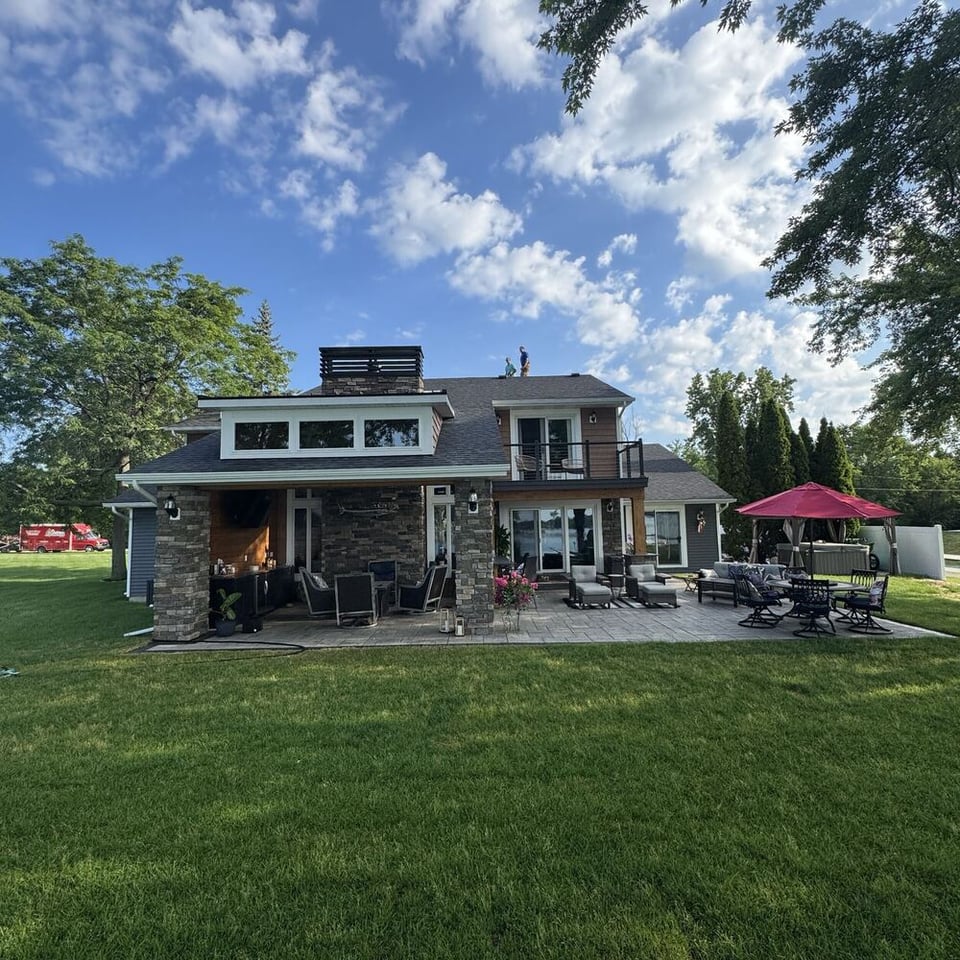
For homeowners who want complete control, building a new home is often the most appealing option. It offers something neither moving nor remodeling can fully provide: a clean slate.
Every detail, from the layout to the finishes, is designed intentionally. There’s no need to work around existing walls, outdated systems, or compromises made by a previous owner. The result, when done well, is a home that fits exactly how someone wants to live.
In areas around Northern Oakland County, or in more rural parts near Linden or Lapeer, building can be a realistic path for those who have access to land and the flexibility to take on a longer process.
However, the building timeline can be a major deciding factor. From securing land and finalizing plans to navigating permits and construction, building a custom home is a long-term commitment. It requires patience and the ability to make dozens, sometimes hundreds, of decisions along the way.
Cost is another piece that often shifts as the process unfolds. What begins as a rough budget can evolve as design choices are made, site conditions are uncovered, and priorities become clearer. For many homeowners, that level of flexibility is manageable. For others, it introduces uncertainty that’s difficult to navigate.
There’s also the question of location. While building allows for complete customization, it often means moving away from established neighborhoods, trading proximity, mature surroundings, and convenience for a newer setting that may take years to feel the same.
Who is Building New Best For?
Building new is often the right path for homeowners who:
- Want full control over layout, design, and finishes
- Are planning a long-term or “forever” home
- Have the flexibility for a longer timeline
- Are comfortable with a higher level of decision-making throughout the process
- Are open to living outside of established neighborhoods
Remodeling: The Option More Homeowners Are Reconsidering
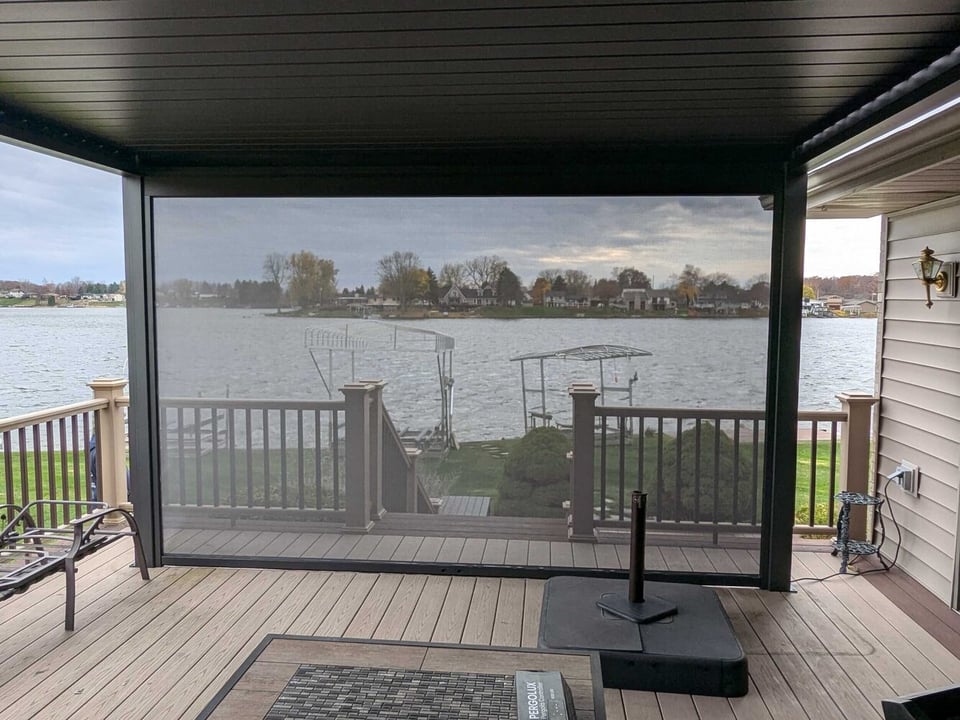
Homes in areas like Fenton, Davison, and Goodrich often have strong foundations and established locations. With the right plan, those homes can be reworked, expanded, and transformed in ways that significantly change how they function and feel.
That can take many forms depending on the home and the goals:
- Kitchen remodeling to improve layout, flow, and daily usability
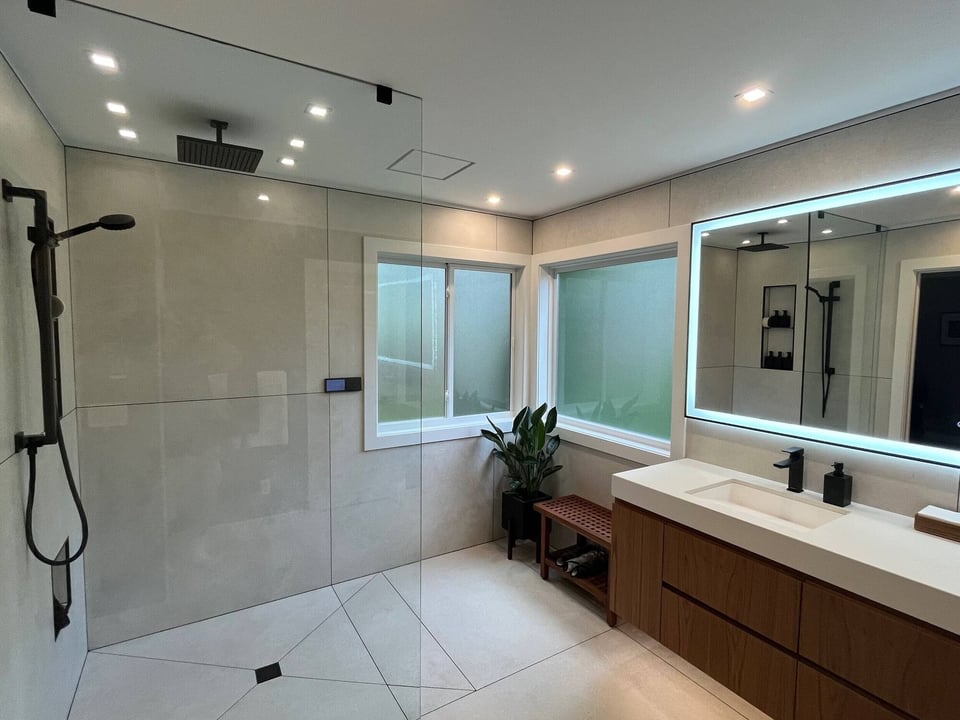
- Bathroom renovations to update outdated spaces and add comfort
- Basement finishing to create usable living space
- Home additions to add square footage where it is needed most
- Decks and outdoor living spaces to extend how the home is used
In many cases, the end result is not just an updated home. It is a home that works in a completely different way. And unlike moving or building, remodeling allows homeowners to keep what they already value:
- The neighborhood
- The lot
- The proximity to work, schools, and family
For homeowners who feel torn between starting over and staying put, remodeling often becomes the path that brings those two goals together.
Who is Remodeling Best For?
Remodeling is often the smartest path for homeowners who:
- Like their location but not their current layout or finishes
- Live in established areas like Grand Blanc, Fenton, or Davison
- Want to improve how their home functions without moving
- See long-term value in their current property
- Prefer a more controlled investment compared to building new
What Makes This Decision Different in Genesee County
While every homeowner faces the same three options—move, build, or remodel—the way that decision plays out in Genesee County is unique.
The local housing market, the age of homes, and the character of different communities all influence what makes the most sense.
In many areas like Grand Blanc, Fenton, Davison, and Goodrich, homes tend to be in established neighborhoods. These are places where people have put down roots, close to schools, work, and community. The lots are often larger, the surroundings more mature, and the locations harder to replace than something newly built.
On one hand, homeowners may outgrow the layout or feel like the home no longer fits their lifestyle. On the other hand, leaving the area, or even finding something comparable nearby, can be difficult.
Inventory plays a role as well. Homes that are move-in ready, well-designed, and located in desirable neighborhoods don’t always stay on the market long. And when they do become available, they often come at a premium, sometimes without fully delivering on what the homeowner actually wants.
Building new can solve some of those challenges, but it introduces others. Available land is typically outside of the most established areas. That means giving up proximity, familiarity, and often the character that drew homeowners to their current location in the first place.
Because of these factors, many homeowners in Genesee County find themselves in a position where:
- Moving means compromising on either the location or the home itself
- Building means leaving the areas they’ve grown attached to
- And remodeling becomes a way to stay rooted while still making meaningful changes
It’s not that one option is universally better than the others. It’s that in this particular market, remodeling often aligns more closely with what homeowners are actually trying to achieve, especially for those who value where they live just as much as how they live.
How Do You Decide Whether to Remodel, Build, or Move?
After looking at all three paths, most homeowners are not lacking options. What they are missing is a clear way to evaluate them. The decision becomes much easier when it is broken down into a few key questions.
1. How important is your current location?
If the neighborhood, schools, commute, and surroundings still work well, that is a strong reason to stay. Location is one of the few things that cannot be changed later.
2. What is not working about your home today?
Is it a layout issue, lack of space, or outdated finishes? Many of these challenges can be solved through thoughtful design. Others may be more limiting. Understanding the difference is key.
3. What is your realistic investment range?
Every option comes with costs beyond the obvious. Moving includes transaction costs and potential updates. Building involves land, design, and construction. Remodeling requires planning and prioritization. Looking at the full picture helps avoid surprises later.
Explore more cost information in our detailed guide here.
4. How long do you plan to stay in your home?
For homeowners planning to stay long term, investing in the current home often makes more sense. Consider your goals for your home, whether you’d like to grow your family there, or if you’re interesting in aging-in-place design features as you get older.
5. How much disruption are you willing to take on?
Moving, building, and remodeling all come with some level of disruption. The difference is how that disruption shows up and how long it lasts.
Working through these questions does not always lead to an immediate answer. But it does bring clarity. And for most homeowners, clarity is what moves the decision forward.
Should You Talk to a Contractor Before Deciding to Remodel, Build, or Move?
One of the most common mistakes homeowners make is trying to solve this decision on their own. Online research can only go so far. Every home, property, and situation is different. What works for one homeowner may not apply to another.
That is where a conversation with an experienced team can make a real difference.
A good process does more than provide a quote. It helps homeowners understand what is possible, what it might cost, and how each option compares in a real-world context. Understanding the difference between design-build and a general contractor can also help homeowners choose the right approach for their project.
For example, a well-planned consultation can help answer questions like:
- Can this home be reworked to meet your goals?
- Would an addition solve the space issue more effectively than moving?
- How does the cost of remodeling compare to building in this area?
- What level of investment would be required to get the result you want?
These are not questions with one-size-fits-all answers. They require experience, perspective, and a clear understanding of both design and construction.
That is why many homeowners choose to talk through their options before committing to a direction.
Who Should You Talk to About Remodeling or Building in Genesee County?
For homeowners in Genesee County and the surrounding areas, working with a team that has a clear process can make the decision much easier.
Swank Builders takes a structured approach to these early conversations. The goal is not to push one option over another, but to help homeowners understand what makes sense for their situation.
Through an initial consultation, homeowners can:
- Walk through their current space and challenges
- Share what they are hoping to achieve
- Get a realistic sense of budget ranges
- Understand which options are worth exploring further
From there, the next steps become much clearer. Some homeowners move forward with remodeling. Others decide building makes more sense. And in some cases, moving is still the right choice.
The difference is that the decision is made with a clear understanding of what each path actually involves.
If you are weighing your options and want a clearer picture of what makes sense for your home, having that conversation early can save time and prevent costly missteps.
Frequently Asked Questions About Remodeling, Building, or Moving
Is it cheaper to remodel or move in Michigan?
It depends on the scope of the project and the condition of the home, but many homeowners are surprised to find that remodeling can be more cost-effective than moving.
Moving comes with added expenses beyond the purchase price. These can include closing costs, moving expenses, higher property taxes, and often updates to the new home.
Remodeling allows homeowners to invest directly into improving their current space. For those who already like their location, it can be a more efficient way to get what they want without starting over.
Is it better to build a new home or remodel in Genesee County?
The right choice depends on the homeowner’s priorities. Building a new home offers full customization but usually requires more time, a higher level of involvement, and often a different location. Remodeling is often a better fit for homeowners who want to stay in established areas like Grand Blanc, Fenton, or Davison while improving how their home looks and functions.
In many cases, remodeling provides a balance between customization and practicality.
How do I know if my home is worth remodeling?
A good starting point is to evaluate the location and the structure of the home.
If the home is in a desirable area and has a solid foundation, there is often more potential than homeowners initially expect. Layout issues, outdated finishes, and lack of space can frequently be addressed through thoughtful design and planning.
The best way to know for sure is to have a professional evaluate what is possible based on the home and the homeowner’s goals.
When does it make more sense to move instead of remodel?
Moving may be the better option if the home cannot realistically be adapted to meet the homeowner’s needs.
This could include major structural limitations, a location that no longer works, or situations where the cost of remodeling approaches or exceeds the value of the home.
For homeowners who need a completely different setting or lifestyle, moving can still be the right choice.
How long does it take to build a custom home in Michigan?
Building a custom home is typically a longer process than many homeowners expect.
From planning and design to permitting and construction, the full timeline can take a year or more depending on the complexity of the project.
Weather, site conditions, and design decisions can all impact the timeline, which is why flexibility is important when considering a new build.
Can remodeling really change how my home functions?
Yes, in many cases it can. Remodeling is not limited to surface-level updates. With the right approach, it can involve reworking layouts, opening up spaces, adding square footage, and improving how the home flows.
For many homeowners, the result feels like a completely different home without changing location.
Who should I talk to before deciding to remodel or build?
It is helpful to talk to a team that has experience with both design and construction, and that can walk through the options in a clear and structured way.
A good process should help homeowners understand what is possible, what it might cost, and how each option compares based on their specific situation.
Having that conversation early can provide clarity and help avoid costly decisions later.
What is the first step if I am considering remodeling in Genesee County?
The first step is usually a conversation. Walking through the home with a professional and discussing goals, priorities, and budget can help determine whether remodeling makes sense and what direction to take. From there, the next steps can be planned with a clearer understanding of what’s realistic for you.
Making the Right Decision for Your Home
Deciding whether to remodel, build, or move comes down to one thing: clarity. Each option can work. The challenge is understanding what makes the most sense for your home, your location, and how you want to live long term.
For many homeowners in Genesee County, that clarity comes from seeing what is actually possible before making a decision. In some cases, remodeling offers more flexibility than expected. In others, building or moving may still be the right path.
If you are weighing your options, talking through your situation with an experienced team can help you move forward with confidence.
To start that conversation, reach out to Swank Builders to schedule an initial consultation and walk through what makes the most sense for your home.